
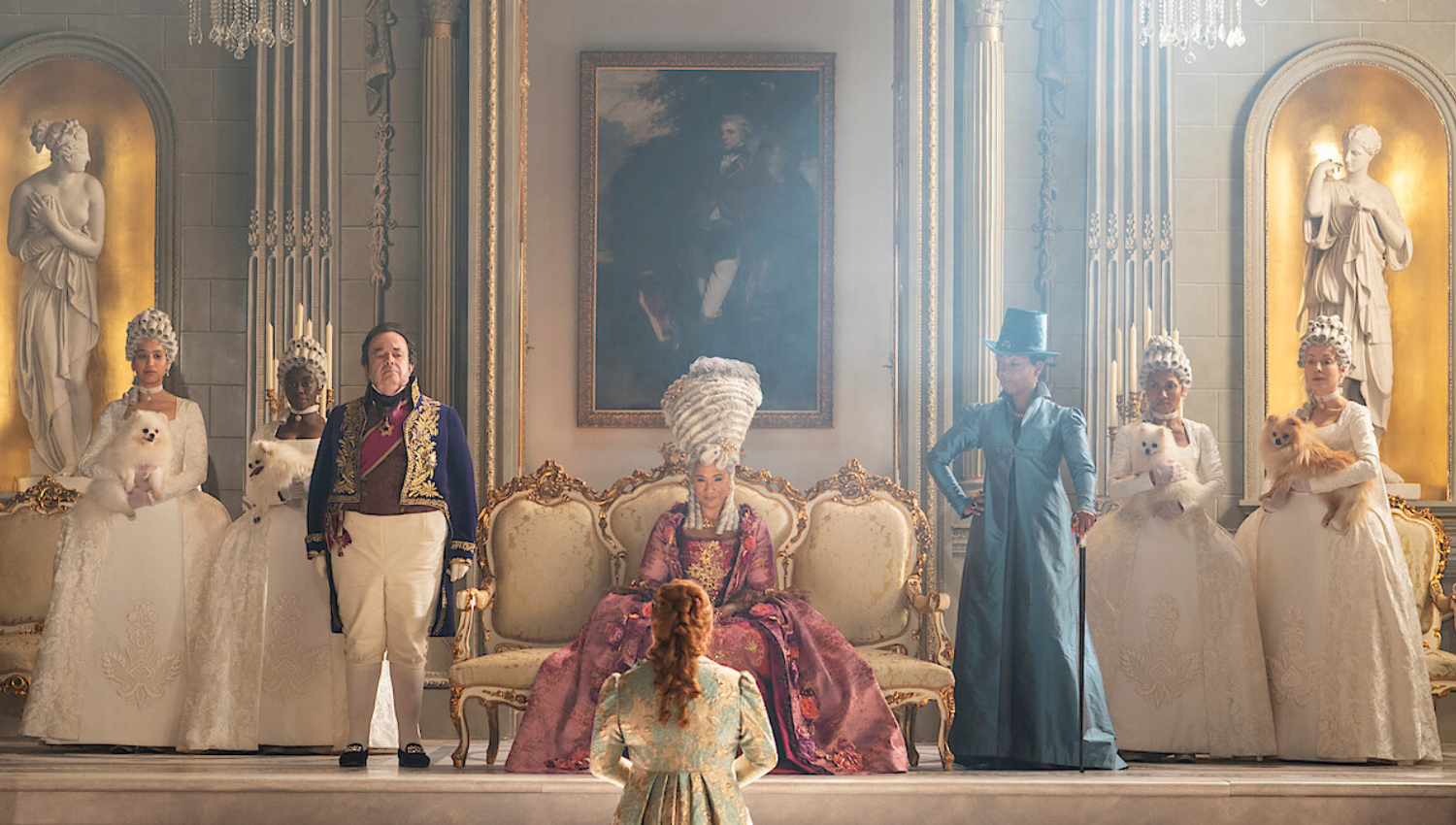
Season Four of “Bridgerton” arrives like a champagne cork that refuses to stop popping. Netflix splits the eight episodes into two neat pours—Part 1 on January 29 and Part 2 on February 26—and the break feels less like suspense than a marketing pause in a waltz. Still, the show’s main pleasure remains intact: it turns courtship into sport, and sport into spectacle.
This time, the ton’s gaze lands on Benedict Bridgerton, the family’s resident aesthete and practiced dodger of permanence. Luke Thompson plays him with a soft-eyed irony, as if Benedict has read too much Keats to commit to anyone who might fold his scarves. At a glittering masquerade ball, he meets the Lady in Silver, a woman who moves like a rumor and looks like an oil painting that came to life. She is Sophie Baek (Yerin Ha), a lady’s maid in disguise, and this season leans hard into the Cinderella tale.
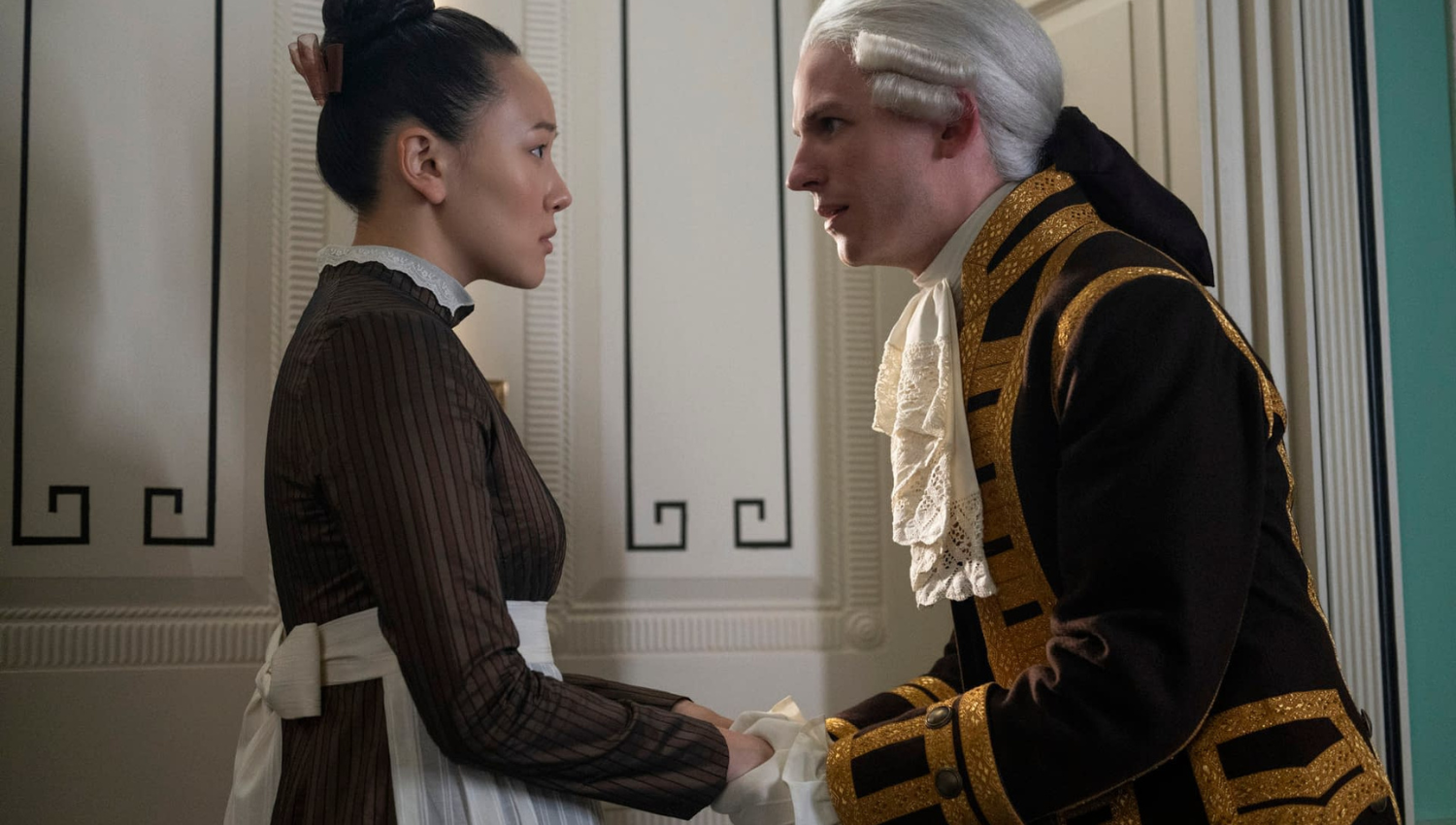
The first episodes sell the fantasy with ruthless efficiency. The ball sequence flirts with operatic excess—candles, silk, an orchestra—and then lands on a quieter charge: Benedict’s shock at wanting something real. Ha gives Sophie a poised alertness that reads as survival, not coyness. When the mask comes off, the show pivots from drawing-room flirtations to a Downton-like exposé of the servant classes of Regency England.
“Bridgerton” often mistakes volume for insight, and Season Four does not fully resist that habit. The side plots bustle, the cameos wink, and the series still treats gossip as a weather system. Yet the central romance gains bite from its imbalance. Benedict can choose love like he chooses paint colors; Sophie risks everything just by being seen. That asymmetry sharpens the sex scenes, too, which register less as confection than negotiation.
The show’s pop-song covers continue to smuggle modern longing into Regency manners, and the trick still works.
Showrunner Jess Brownell knows when to stop talking and let textures speak. Costumes carry emotional subtext; a glove, a ribbon, a borrowed coat become small declarations. The show’s pop-song covers continue to smuggle modern longing into Regency manners, and the trick still works.
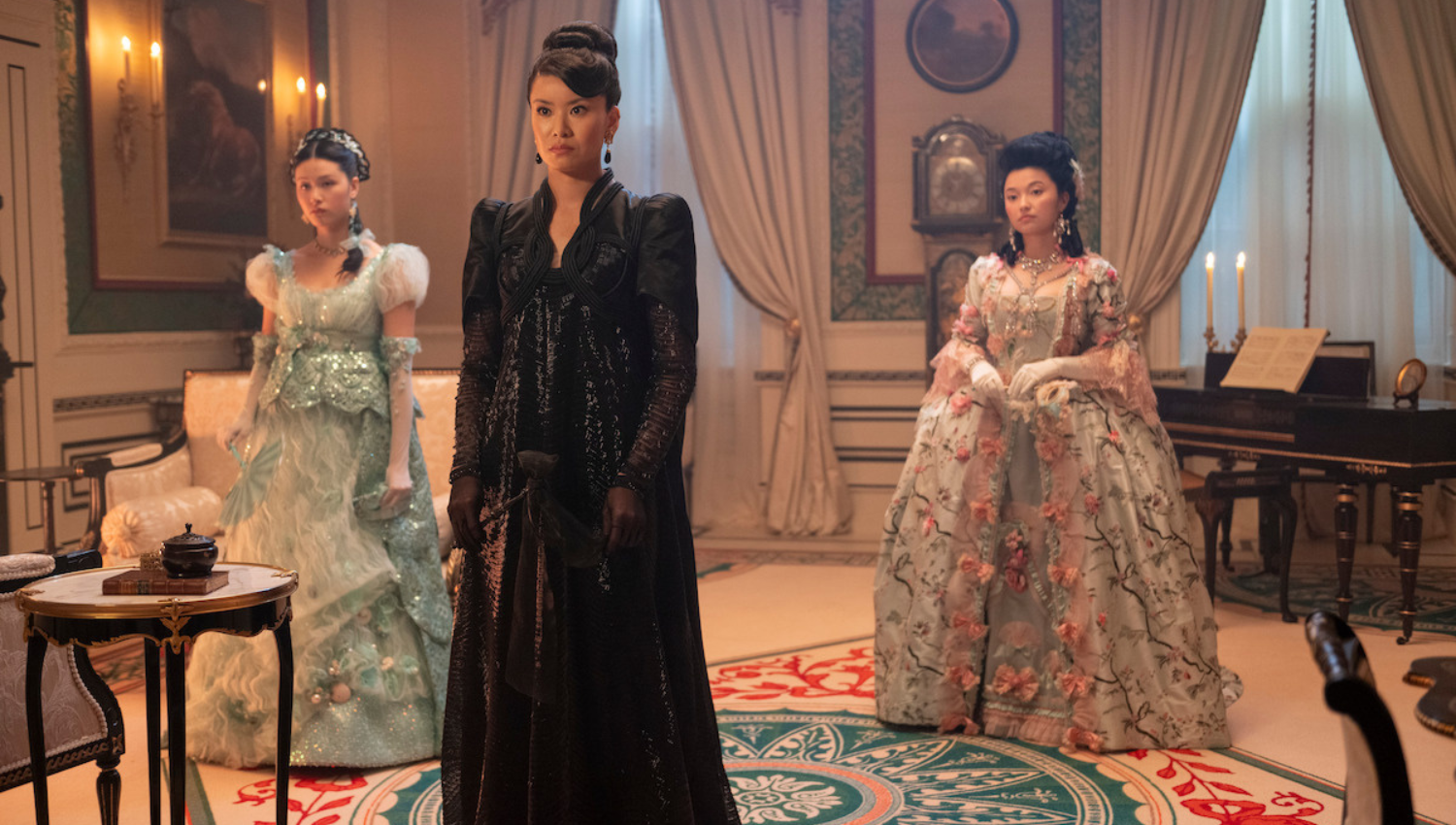
as Lady Araminta, Michelle Mao
as Rosamund Li, and Isabella Wei
as Posy Li
The villains help. Katie Leung’s Lady Araminta runs her household like a Karen, and the stepsisters—Rosamund and Posy—embody two flavors of entitlement, one wicked and one not. Even Queen Charlotte’s scrutiny feels personal now, as if romance has become a matter of state with consequences for servants in the room.
By the end, “Bridgerton” offers its happiest kind of compromise: a fairy tale that admits the price of the glass slipper. Benedict’s match is not a mirror; she is a challenge. The series looks better and, briefly, feels smarter when it lets her be one.