
Oscar-winning director Chloé Zhao (“Nomadland”) has a way of looking at the world that evokes such painful beauty. Her latest film “Hamnet” is an adaptation of Maggie O’Farrell’s book, following “forest witch” Anne “Agnes” Hathaway who marries a young tutor named William Shakespeare. The earthy film is another exercise in simplicity for Zhao, captivating us from the first frame of rustling trees, authentic looks, and production design from the era to some of the year’s best performances from Oscar nominees Jessie Buckley (“The Lost Daughter”) and Paul Mescal (“Gladiator II”). What’s ultimately a universal love story about tragic loss is amplified by Zhao’s cinematic sensibilities and the context of how the work of “Hamlet” came to be.
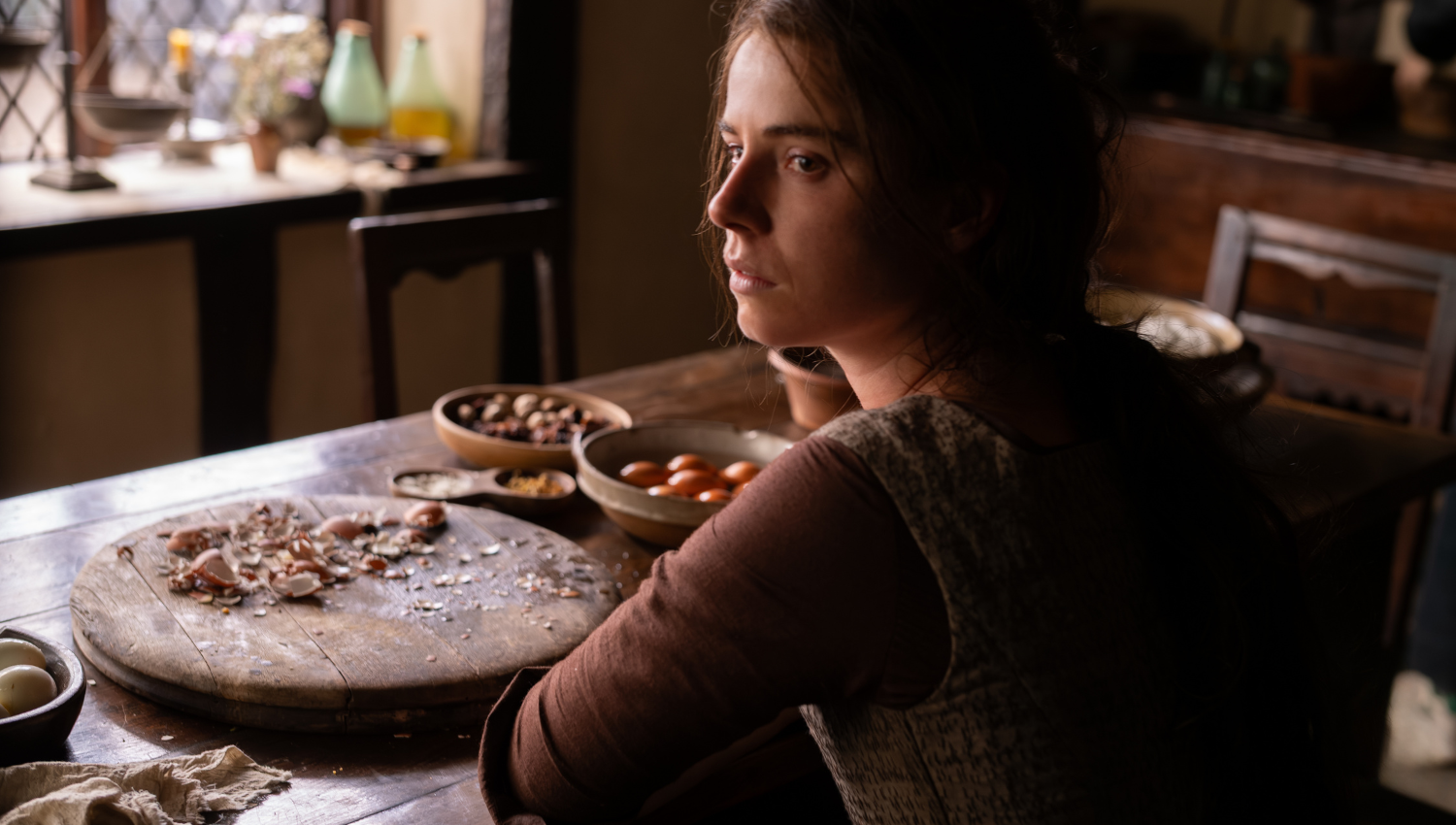
“He loves me for what I am, not what I ought to be,” Agnes (Buckley) confesses to her brother Bartholomew (Joe Alwyn), seeking his approval for her marriage. Young Will (Mescal) has no trade or skill beyond the pen. Their first few years together he’s frustrated at his lack of meaning. Agnes (pronounced Ann-yes) and Will are two halves of a whole and she understands his need to be in London working and creating. She remains on the farm with their children, passing on her love of nature, dirt and natural healing. “What is given can be taken away at any time,” Will’s mother (Emily Watson) cautions. When tragedy touches the Shakespeare family, their grief will go on to inspire generations to come.
The raw portrayal of grief by Buckley and Mescal is so effective it’s transferable across the screen.
There isn’t an ounce or moment of pretension in “Hamnet”. There are no bloated scenes, nothing added for superfluous effect. Zhao is organic in her filmmaking, giving the audience only essentials. The raw portrayal of grief by Buckley and Mescal is so effective it’s transferable across the screen. Buckley is an actor with limitless range. We have seen her do comedy in “Wicked Little Letters”, sing and perform in “Wild Rose” and a variety of other dramatic roles in the last few years. Her performing style is ferocious by nature, and her portrayal of Agnes is as intense as any motherly figure captured on screen this century. Following last years “All of Us Strangers” and this years’ “A History of Sound”, Mescal is the go-to thespian for grief. Mescal’s ‘bursting at the seams’ portrait of restrained mourning is a profound work of tearjerking art.
Composer Max Richter (“Ad Astra”) also delivers his most eloquent work to date. Richter is mostly associated with his beautiful, but overused “On the Nature of Daylight” featured prominently in “Arrival” and used again here in the climax. That piece offers up such emotion it’s understandable why Zhao would choose it, despite its familiarity.
However, the original work Richter composes for “Hamnet” is equally as powerful and specifically catered to the films more ethereal elements. It’s a beautiful blend of classical orchestral sounds with modern flourishes that perfectly complement every scene. When Nicole Kidman said: “Heartbreak feels good in a place like this,” she must certainly have been referring to Zhao’s articulate filmmaking hands.
Final Thought
Buckley & Mescal bestow the most beautiful performances of the year while Zhao’s understanding of cinematic heartbreak is among the divine.
