
Hedda
Dustin Chase
Director Nia DaCosta has this knack for re-imagining. It started with the horror film “Candyman,” continued with the superhero flick “The Marvels,” and now the stage play “Hedda.” Likely more impressive for those familiar with Norwegian playwright Henrik Ibsen’s “Hedda Gabler,” performed on stage by such actors as Cate Blanchett, Maggie Smith, and Ingrid Bergman. Understanding what DaCosta has reworked here, compared to the original, will show more creative feats than simply being introduced to this story for the first time. However, balancing the idea that a large film audience might be discovering Hedda Gabler for the first time, DaCosta stays far away from anything remotely feeling like a play adaptation.
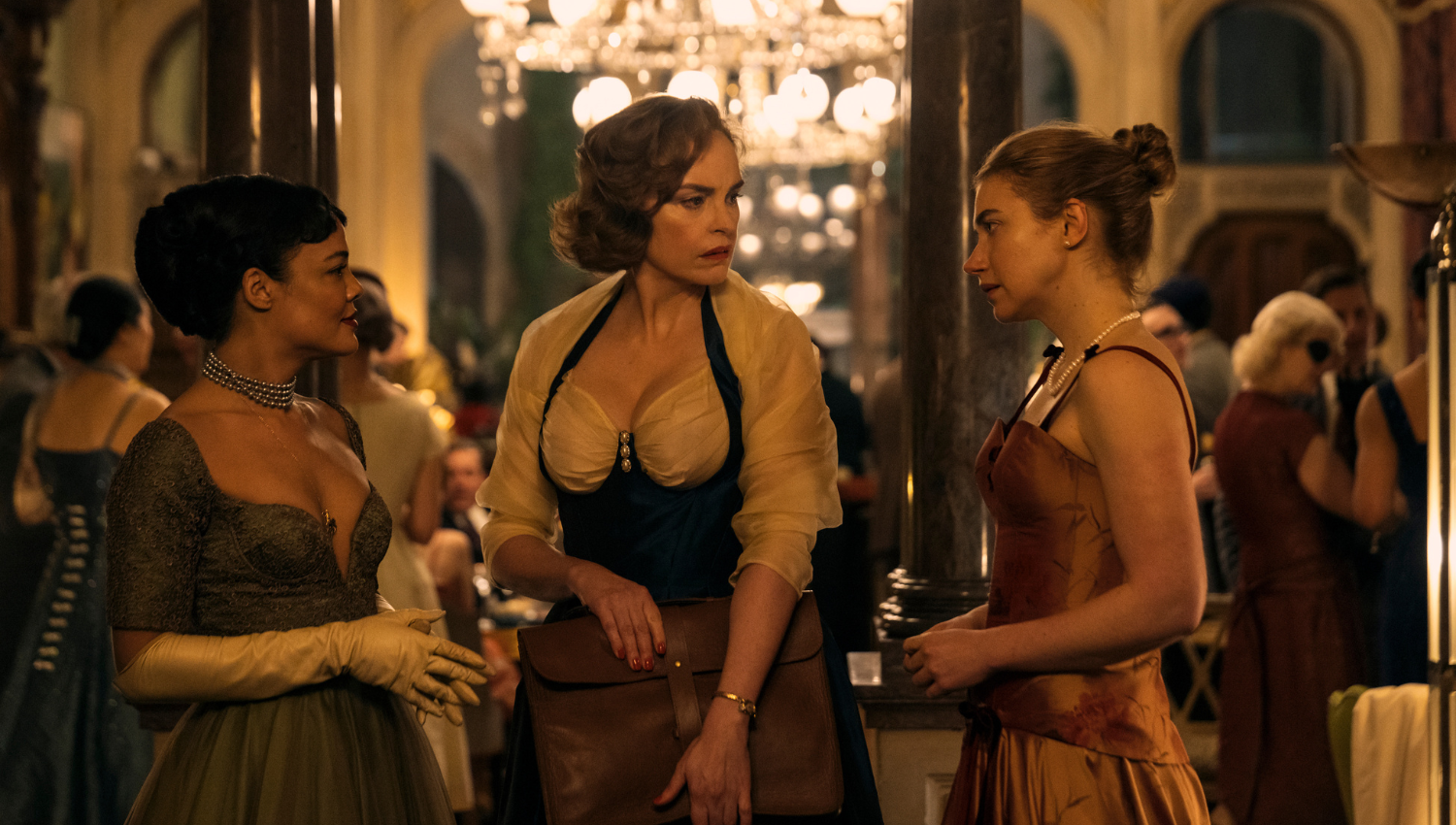
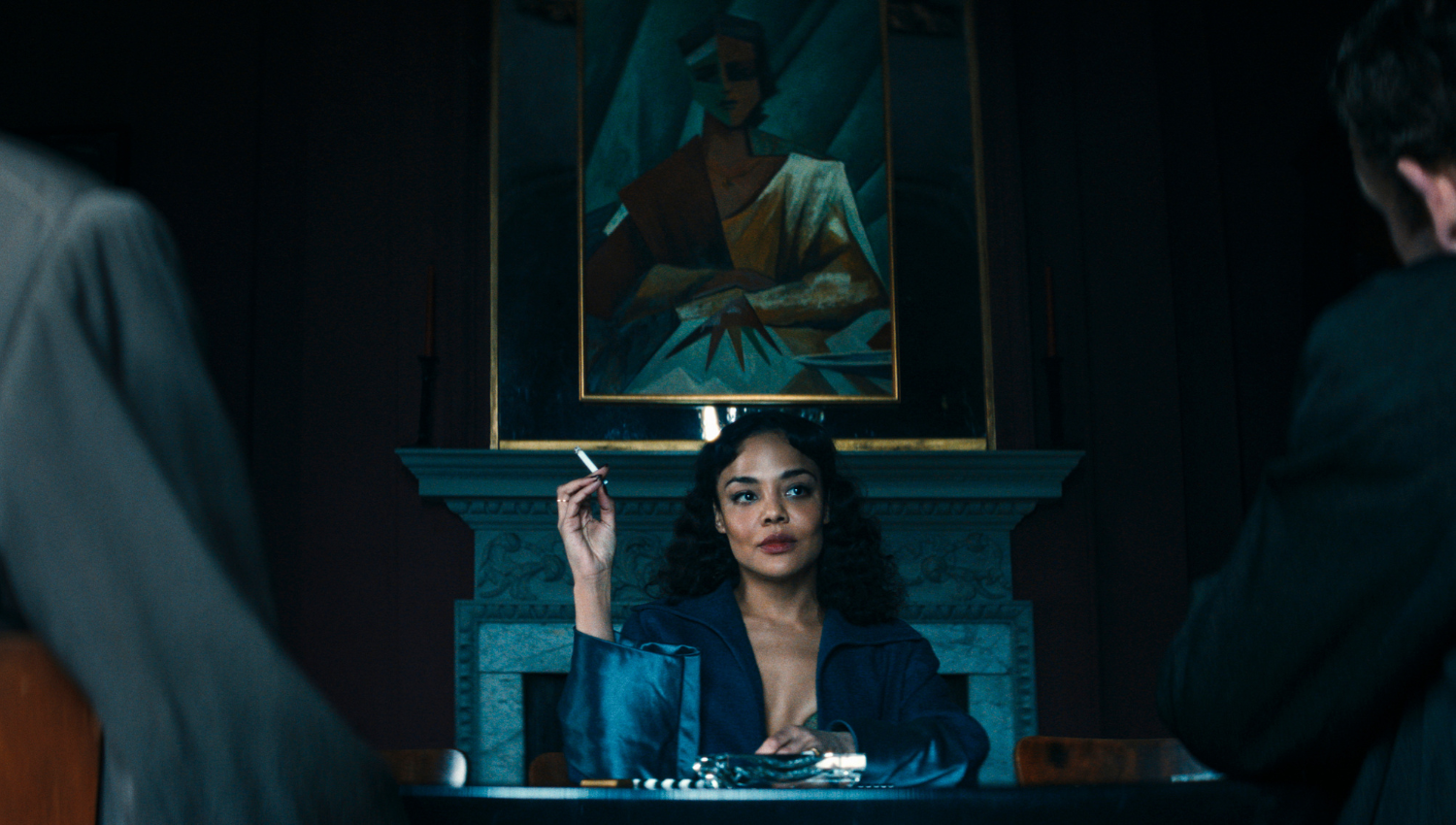
“Nothing can go wrong tonight, Hedda,” George Tesman (Tom Bateman) tells his wife. The newlyweds are hosting a who’s who party with George’s academics and Hedda’s more entertaining socialite friends. For someone who has everything, Hedda (Tessa Thompson) always wants more. Her fascination with guns has lover Judge Roland Brack (Nicholas Pinnock) concerned, yet it’s former flame and her husband’s academic rival Eileen Lovborg (Nina Hoss) where her jealousy truly lies. If Hedda can’t have you, she will ruin you. If she can’t beat you, she will destroy you. If you say no to Hedda, well, you’d better watch your back, or at least your manuscript. “Hedda is going to cause trouble tonight, I can tell.”
As the instigator of everyone else’s misfortune, the role of Hedda requires Thompson to maintain a steady control.
Thompson (“Creed,” “Thor Ragnarok”) delivers the dialogue-heavy role like second nature. Always a highlight in whatever film she is appearing, “Hedda” allows her to flex acting muscles we haven’t seen before. For almost the entire film, she is in every single scene, even if she isn’t speaking, she’s manipulating with her eyes or gestures. As the instigator of everyone else’s misfortune, the role of Hedda requires Thompson to maintain a steady control. This gives the supporting players like Hoss, Poots, and Pinnock the dramatic spinning out of control moments. Hoss (“Tar”) is also equally amazing when her character finally arrives at the party.
DaCosta’s conceptualizing is like mashing together “Gosford Park” with “Babylon” by way of “Saltburn”. Her antiplay means things are moving all the time. The restrictions of the stage are out, and characters moving from one room to another, indoors and out, create almost a dizzying experience. Previous versions of Henrik Ibsen play were never this sexy, costume designer Lindsay Pugh has made sure of that. While “Hedda” might not be the best film of the year, it’s a striking example of a successful interpretation and reinvention of material over a century old, and how cinematic ingenuity can bring a diverse audience into material they would otherwise be shut out of.
Final Thought
Thompson’s performance and director DaCosta’s reimagining talent brings much needed new life to century old Hedda Gabler.