
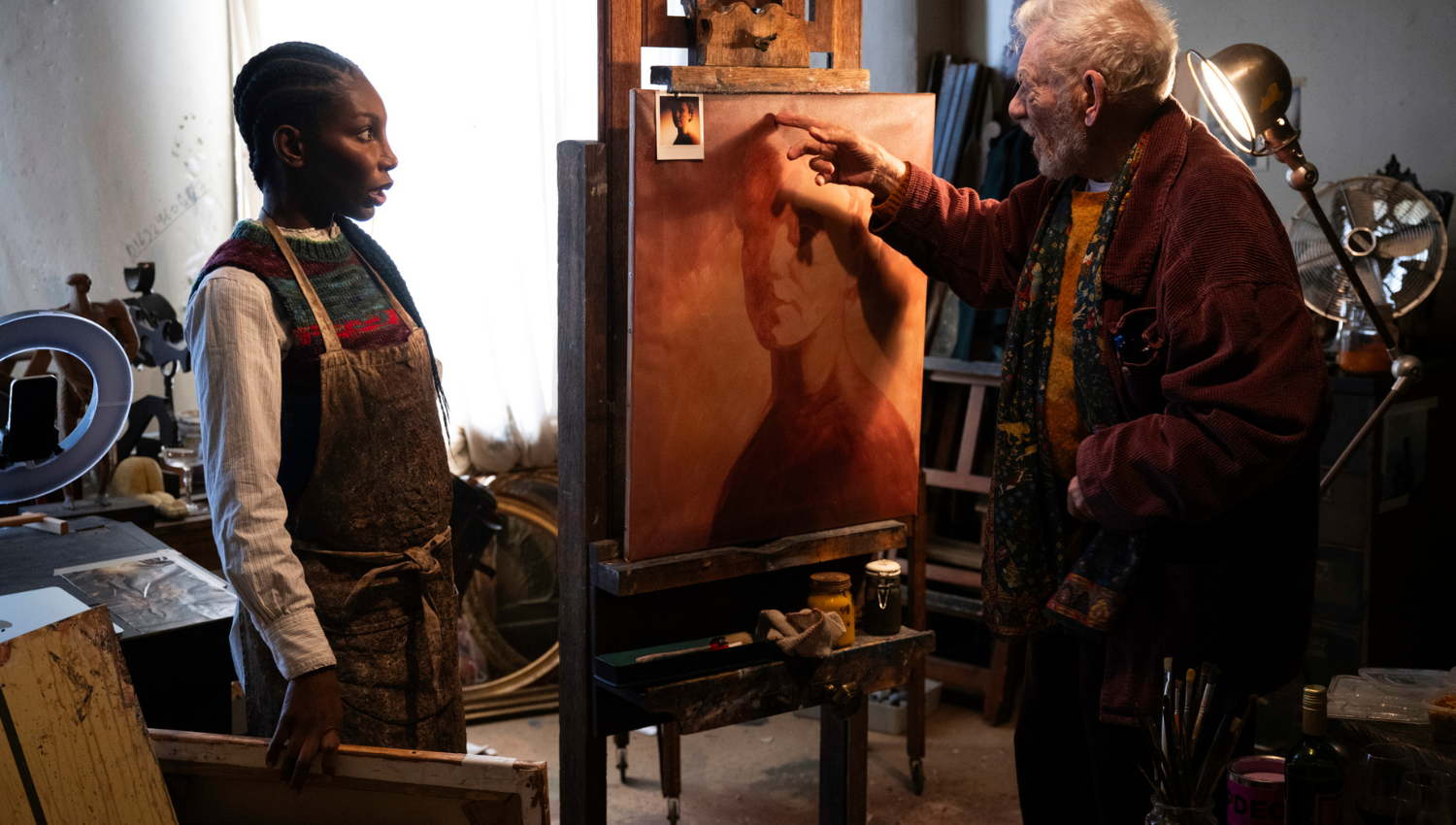
Steven Soderbergh’s The Christophers is a chamber piece with a crime scribbled in the margins of the sheet music. The premise sounds like a caper: the adult children of reclusive artist Julian Sklar hire Lori Butler, a young painter and occasional forger, to finish his abandoned canvases so they can cash in after he dies. But Soderbergh and screenwriter Ed Solomon are after something sharper than plot. They want to know what art owes the artist, what children owe a monstrous parent, and what talent costs when it curdles into ego.
The film is small in geography and large in implication. Much of it unfolds inside Julian’s cluttered London home, which feels less like a house than a mausoleum with unpaid bills. Julian is played by Sir Ian McKellen, and the performance has the sour sparkle of old champagne. He is funny, vain, wounded, cruel, and still dangerous. McKellen does not ask us to forgive him. He asks us to keep watching.
Michaela Coel (Black Panther: Wakanda Forever) gives the film its pulse as Lori. She enters under false pretenses, but she is never merely the con artist in someone else’s scheme. Coel plays her as alert, guarded, and hungry for artistic seriousness. Lori knows what Julian once was. She also knows what he has become. Their scenes together have the energy of a duel in a room full of turpentine.
A forgery may reveal more truth than an authentic work made by a man who has stopped caring.
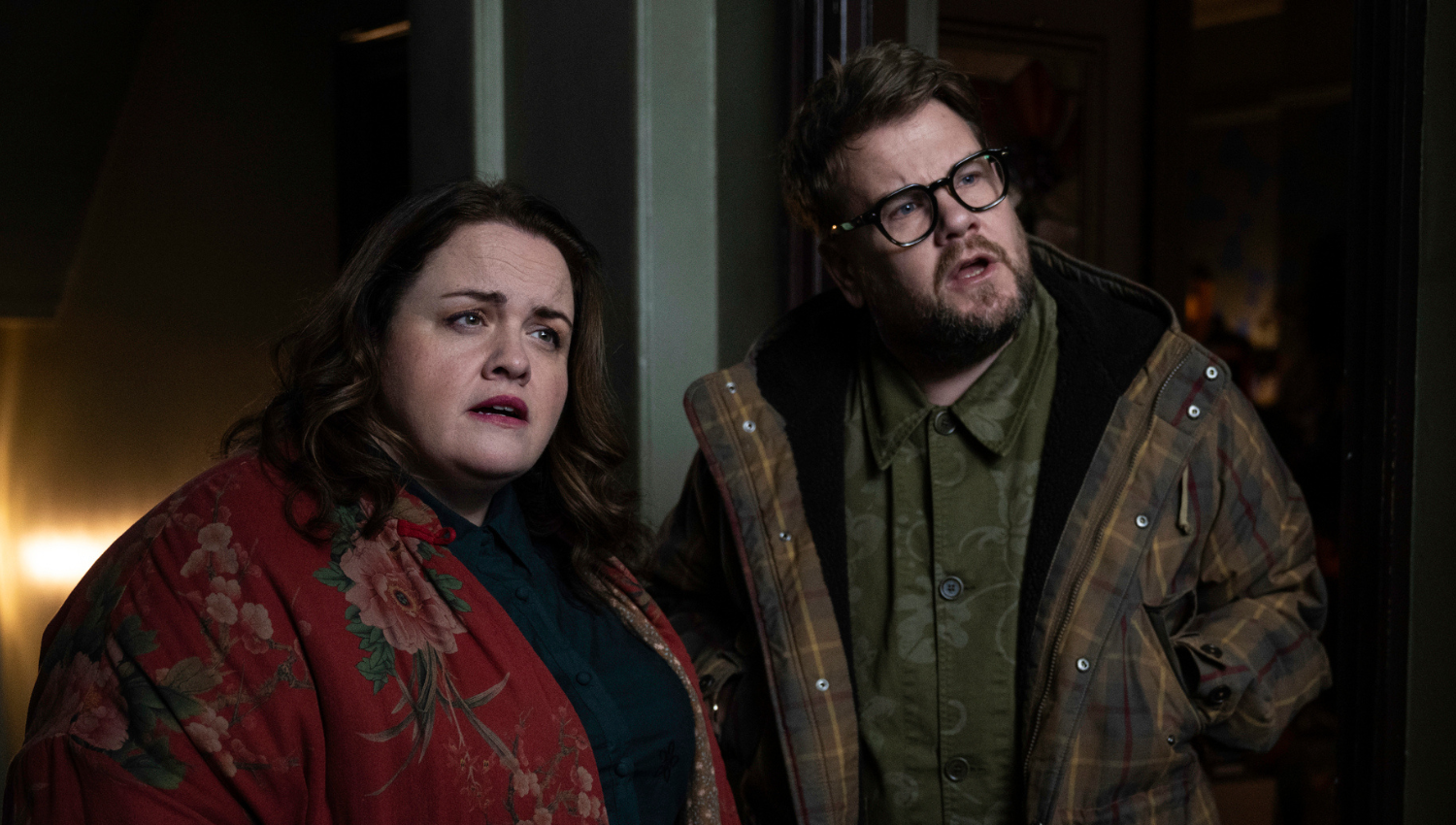
Soderbergh has always loved systems: crime systems, medical systems, financial systems, social systems. Here, the system is legacy. Julian’s children, played by Jessica Gunning (Pride, Back) and James Corden, are not simple vultures. They are damaged heirs trying to monetize the one thing their father gave the world while withholding almost everything from them. That makes their greed uglier and more understandable.
The movie works because it refuses the soft landing. Nobody gets purified by good deeds. Nobody gets a speech that washes the slate clean. Solomon’s script has a theatrical density, but Soderbergh keeps it from becoming embalmed. The camera moves with quiet suspicion. The house shifts around Lori, as if it’s watching her.
There is also a dry, wicked humor in the premise. A dead or dying artist is worth more than a living one. An unfinished canvas can become a retirement plan. A forgery may reveal more truth than an authentic work made by a man who has stopped caring. That irony gives The Christophers its bite.
The film’s weakness is that its verbal sparring occasionally feels too polished. Real people bleed in fragments; these people sometimes bleed in paragraphs. Yet the actors carry the language with such precision that the artificiality becomes part of the design.
The Christophers is not Soderbergh in heist mode. It is Soderbergh in surgery mode. He trims away noise until only greed, resentment, and talent remain. The result is brisk, literate, and quietly vicious.
Final Thought
Ian McKellen turns bitterness into performance art. Michaela Coel gives the film its moral tension.
