
The History of Sound
Mark White
Folk songs, no matter where they may be heard or have come from, carry history and humanity in every verse; uniquely, the varying origins and inspirations of these songs sonorously vibrate distinct tones on the universal human experiences of love, life, grief, pain, and even death. Which is why the use of folk songs – and the act of preserving them for posterity – is not only an apt metaphor used in The History of Sound, but stands as perhaps the most poignant use of a mirrored metaphor in recent cinema; a film that chronicles the life of one man simultaneously harmonizes with the act of trying to capture history and art in all the intricate, minute, and wondrously inexplicable moments that define a specific moment in time.
Lionel Worthing (Paul Mescal, with narration from Chris Cooper) is a young man with an intense relationship with sound – the older version of Lionel listing in great detail that how he – starting at childhood – had perfect pitch and could isolate sounds and pick them out in nature, creating a deep love for music and song; Lionel even describes a synesthesia-like association with certain notes, certain notes casting auras of primary color. His father, Lionel Sr. (Raphael Sbarge), notices and nurtures his sons’ unique talents and provides an intimate homemade soundtrack at home for him with songs and his banjo, while his mother (Molly Price) seems to wish the men in her life would focus on the practical life of keeping their farm. When Lionel’s school teacher notices his musical gifts – especially his singing voice – she arranges for Lionel to attend a musical conservatory, which is where he eventually meets David White (Josh O’Connor) at a university bar.
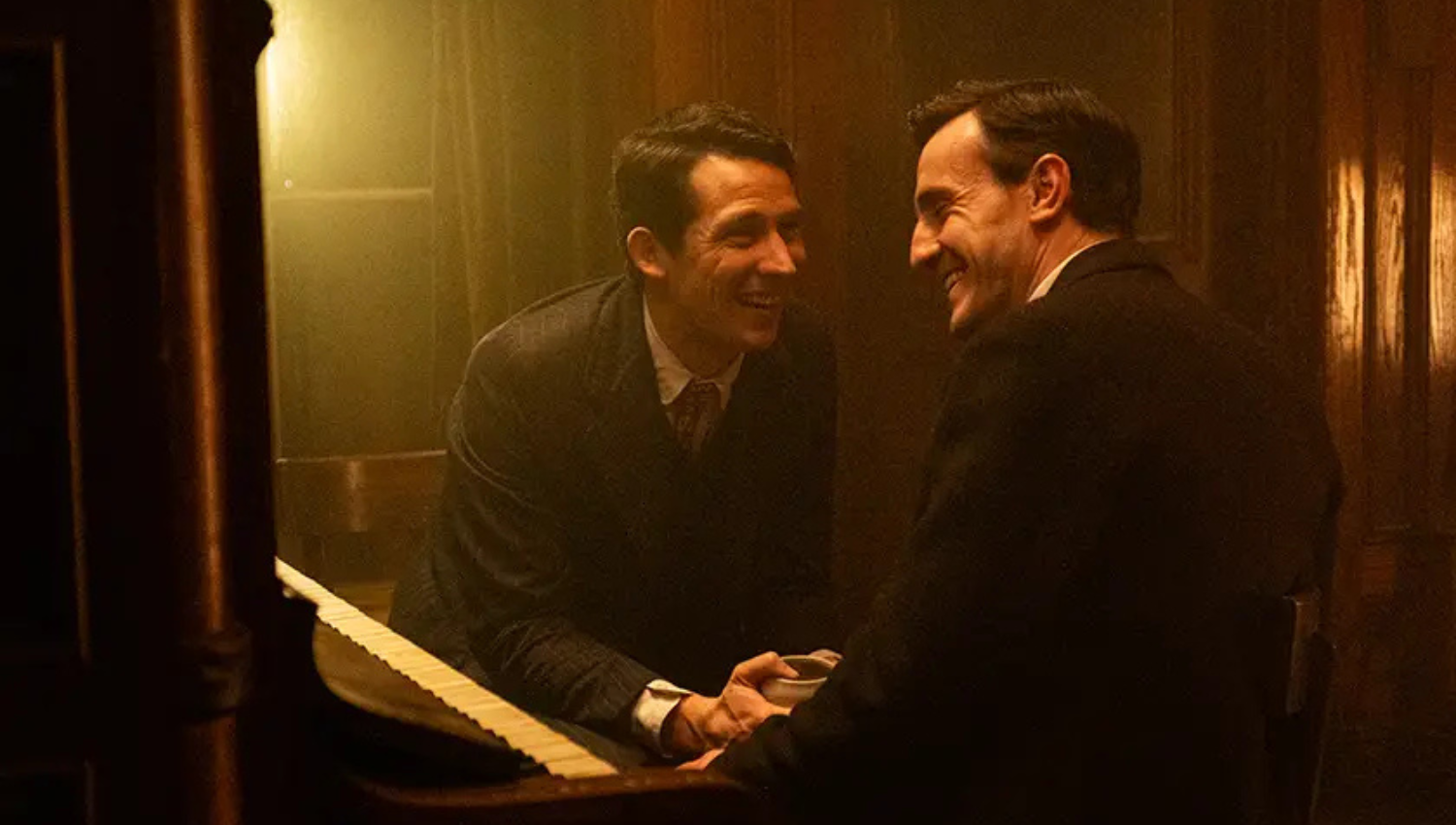
David, on a piano playing one of the many folk songs Lionel’s father taught him as a child, draws Lionel in, and an instant connection is struck up between the two; David is taken with the sincere beauty of Lionel’s voice and his gentile and open spirit, as Lionel marvels at David’s cool wit, ease of living, and his knowledge of folk songs. Friendship quickly becomes something much more as the two men become intertwined in their exploration of music and history, as well as each other.
Time moves on, from the turn of the century to the first World War and the beginning of the Roaring Twenties, and finds the lads divided: David – now a war veteran – and Lionel forced to return to the farm to help his parents. But when David writes to a farm-worn Lionel that he wants him to join him on an expedition across the remote regions of New England and the Appalachians to catalogue and transcribe folk songs, Lionel agrees and leaves the family farm to join Da-vid in his academic journey across the songbook of the land, finding the origins of some of America’s most powerful songs, as well as a safe space and time where two men could live in complete harmony with one another.
But not everything is idyllic for David and Lionel, as the reality of the world is always there to underline a very simple truth: their differences may be enough to keep them apart. From interactions with people across the country, to witnessing history and their own separate reactions to it, David and Lionel obviously care deeply for one another, but might be just different enough to make what they share profoundly special, but resolutely fleeting. And as their song collecting trip comes to an end, both men are faced with contemplating what comes next, and whether or not this beautifully brief intimacy will come between them again.
To say anymore about the film would certainly spoil the remainder of the story; suffice it to say that as is so often with these queer dramas, the reveal of what becomes of Lionel and David is not a ‘happy’ one. But the quasi-inevitable sadness in the resulting ending is nowhere near as poignant or as beautiful as the journey to that ending, and that that journey means something beyond highlighting a queer romance.
The film’s central construct is the journey these two men go on to preserve music, filmed as a representative distillation of memory and history in a lived experience; this idea that the singular and unique moment of creating or singing a folk song – often seen as ‘once in a lifetime’ thing, precious and fleeting in that moment – is very much like finding love, and that finding some way to record and preserve and return to that singular, magical moment is a paradox of both being scientifically possible and emotionally impossible.
This metaphor is exquisitely captured in a singular scene where David and Lionel have set up their phonograph with a small family: Lionel is trying to explain to the curious young children as he sets the phonograph up just how the device works, and ends up using his hands on his throat (and guiding the children to the same) to show how sounds not only vibrates, but that it can be felt, and that the physical affect of sound resonates in and through the body just as much as it does on the needle etching on wax on a phonograph. As Lionel teaches the young children about sound, David watches in tender admiration as this man – the man he feels so much affection for and quietly sharing his tent and life with – captures the singular magic of the moment of their work as much as their time together. The spontaneity, the imperfections, the resonance of real emotion…moving through David as he feels the vibration of the man across from him in space and time, just as they work to capture the life of a small family in a singular recording, is spellbinding. The metaphor is transcendent in its perfect execution against the dynamic of the film’s two leads – exploration of what creates a memory and the incalculable minutia of ‘the moment’ that makes it, all as captivating as it is to watch David and Lionel’s earnest attempt to preserve the magic of songs being shared.
The film itself is an exercise in restrained emotion, allowing the moments between Lionel and David, as well as the reflective moments Lionel experiences as he ages forward through life, to populate the screen and breathe without need for excessive acting or exposition. And with Paul Mescal and Josh O’Connor, being in the moment is all you need; both men are able to telegraph thoughts and feelings with small movements in the eyes or at the corner of their lips, a tender intimate physical shorthand, and perfectly placed vocal tones on words as they speak in quiet tones, either round a campfire or in the intimate afterglow of intimacy in their tent. Mescal especially shines here as his Lionel is someone whose gift has been overwhelming dimmed at times – duty bound to family and their farm – to being celebrated by the people he meets and they marvel at his work. Mescal delivers such wonderfully restrained emotions throughout that Lionel is almost like a semi-transparent vessel filled with oils and waters, struggling to find a balance for the contents within, and only just visibly showing the inner turmoil while keeping every drop in-side.
A meticulously melding metaphor with music and mindful musings on momentous, meaningful moments in life, Hermanus’ film encapsulates something some might call love, but to others, is something that can only resonate in memory.
The more masked – tortured – and quite gregarious Josh O’Connor’s David is both fascinating and frustrating: the script does not flesh out his backstory much until it is needed, and even then it feels a tad hollow given the import of it. But it is David’s actions that we watch intimately unfold – given that all we know of David throughout is from Lionel’s time with him – where we see that behind the capricious and charming turns of him, David is compassionate and devoted to the idea of caring for Lionel, and the on-screen chemistry becomes a blushing exchange between two men who help soothe and complete one another. Simple acts like collecting feathers or mending socks are titanic gestures with meaning here. Simply put, the two leads put in masterful performances that do so very much in a quiet synchronicity that it seeps into the soul rather than demands attention as it unfolds, which serves the purpose of the film beautifully.
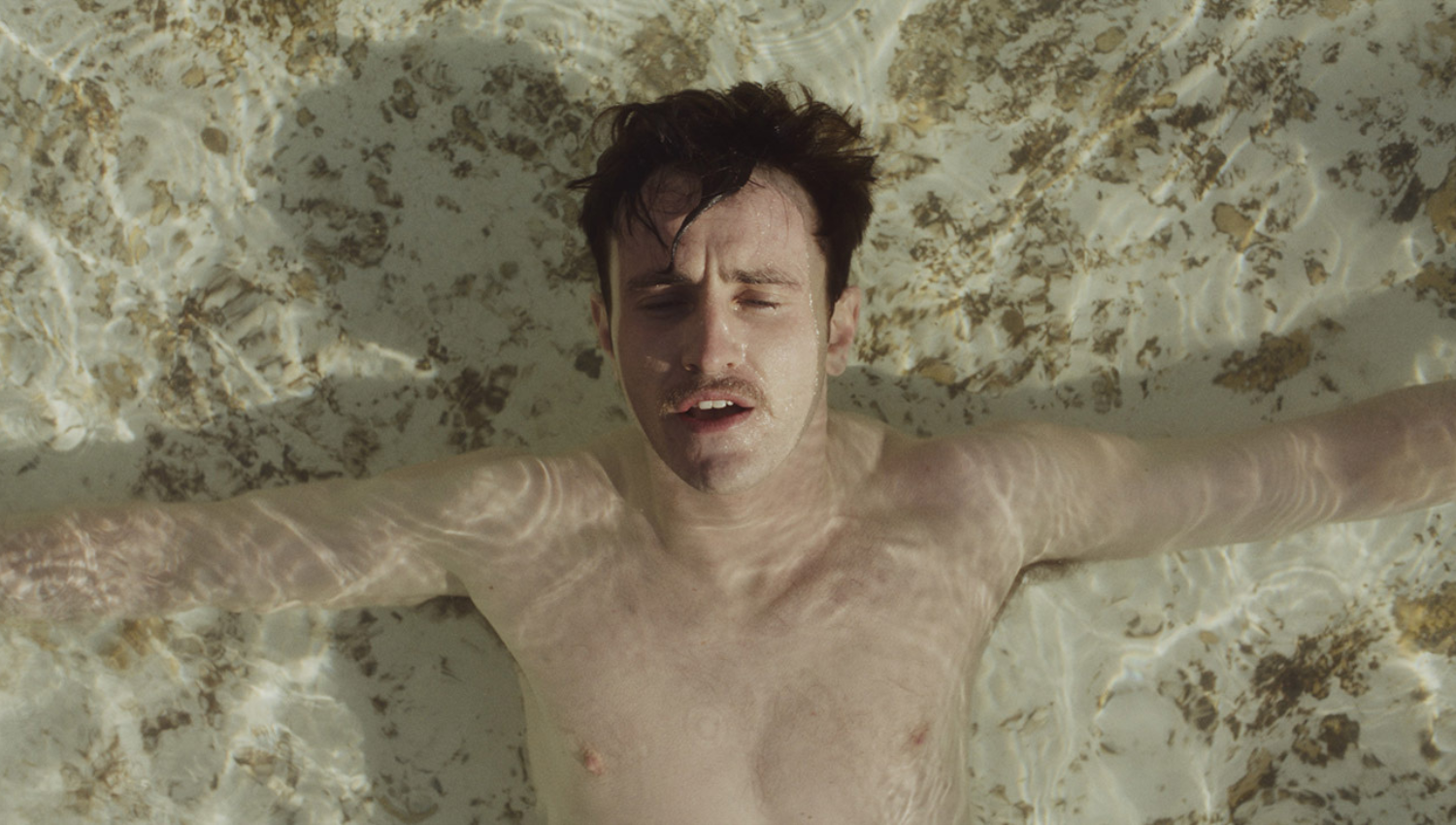
Hermanus chooses sepia color tones everywhere here – costumes, sets, even natural locations are all in muted hues – to not simply recreate the rural location set early last century, but to create natural, earthy elements that take the viewer back to the foundations of America. No exotic or ‘romanticized’ locales here – it is Americana of hard work and sweat and sacrifice, as much as it is about harsh truths and unfulfilled dreams. What is fascinating though, is the intimate details of color and texture that populate Hermanus’ film: intricate layers of white dust on furniture, man-gled grey cobwebs in corners, Lionel’s soft blue pillow on his back as he travels, the aqua of a fountain in Rome as Lionel floats in it. The visual composition of color and the framing of the film often feels like old photographs, faded or muted but where small details pop, creating a striking visual mirroring of how many often describe a memory. Fitting as Lionel’s life unfolds and how some details – sensations, feelings, moments – take on more color than others or stand-out while the rest is muted and stuck in a more dated version of time. It is poignant and con-scious filmmaking composition that only adds more depth to the performances and the story on the screen.
And then there is the music. Without waxing lyrically for pages more, all that can be said is that the music is breathtaking to listen to throughout; folk music standards and original pieces are sung here – many of them by Mescal himself with only a piano or on his own – and that the har-monies, melodies, and lyrics of many will pluck at the heart just the right way until the film’s end.
The History of Sound is unique as a queer film in that it does not sensationalize the relationship between Lionel and David (‘they’re having SEX!’ ) as the reason to watch, nor is this a story of ‘firsts’ for our leading men either – which has sort of become the go-to of many male queer stories; we actually get a direct impression during their first tryst that this is neither of theirs ‘first time’. In the weeks since its initial screening at Cannes and again in Venice, other reviews have at times focused on the script’s lack of historical focus or framing to inform the struggle for Li-onel or David as a means of ‘defining’ their relationship. To rebut, it should be comfortably presumed by now that anyone watching a movie today having lived through even the last fifteen years would understand explicitly that homosexuality was highly illegal in the US in the early decades of the last century, and that there is simply no need for plot points or pointed dialogue to drive the point home. The script itself quietly structures the relationship to keep it away from prying eyes and the knowledge of everyone in Lionel or David’s lives. But compound that with the restrained manner of both men – looking to pass in a very war-torn and masculine world – and the quiet but demonstrative tenderness they share when together that feels like a love shared between two men in a world where it should not, but the fact that it does and that the audience can quietly bare witness to it is both beautiful and fragile.
Instead of taking a story about two men in love and setting it against social conditions designed to destroy it, Hermanus gives us a film focused on the feeling of memory, and the act of trying to hold onto such a formative one as we move through life. Lionel does indeed grow older and have a life full of other people and experiences, but the definitive and shaping moments shared with David make him who he is, and in spite of whatever it is that takes Lionel away from that moment physically in space and time, he – as we all can or do – can look back in memory and retain the pieces that matter most. In framing much of the story around recording moments in time, Hermanus and his two actors magnify the act of memory and sensory recall, as well as the human act of preservation – the need to remember – to not just chronicle history, but to give import and meaning to our own lives on a very personal level as we live it. This is more than a film about a first love; this is a film about what that feeling means, and how we recount memories – good or bad, joyous or painful – to give shape to who we are throughout our lives.
With careful attention to detail and tremendously tender acting from its stars, The History of Sound vibrates and moves us, and perhaps asks us to listen to the echoes of memory in our own lives to see what sound – and feeling – we get from it. We might just hear ourselves, and those who we hold dear, in the moment.
Final Thought
Mescal and O’Connor carry the slightness of the story - for better or worse - in a way that will hopefully push queer cinema away from the tragedies of first love or coming out. But be warned - the ending will still break your heart in the best way possible.