
Silo, Season Three
James Brown
Apple TV+’s Silo has always understood that the greatest prison is not concrete but certainty. While other dystopian dramas race toward revolution, explosions, or apocalyptic spectacle, Silo prefers the unnerving power of a whispered secret passed between neighbors who no longer trust the walls around them. Season Three rewards that patience by widening its scope without losing the suffocating intimacy that has defined the series from the beginning.
Rebecca Ferguson once again anchors the story with remarkable restraint. Juliette Nichols remains television’s most unlikely action hero—not because she lacks courage, but because every brave decision appears to cost her another piece of herself. Ferguson has mastered the art of communicating entire pages of dialogue with a fleeting glance, allowing the audience to experience discovery and dread simultaneously.
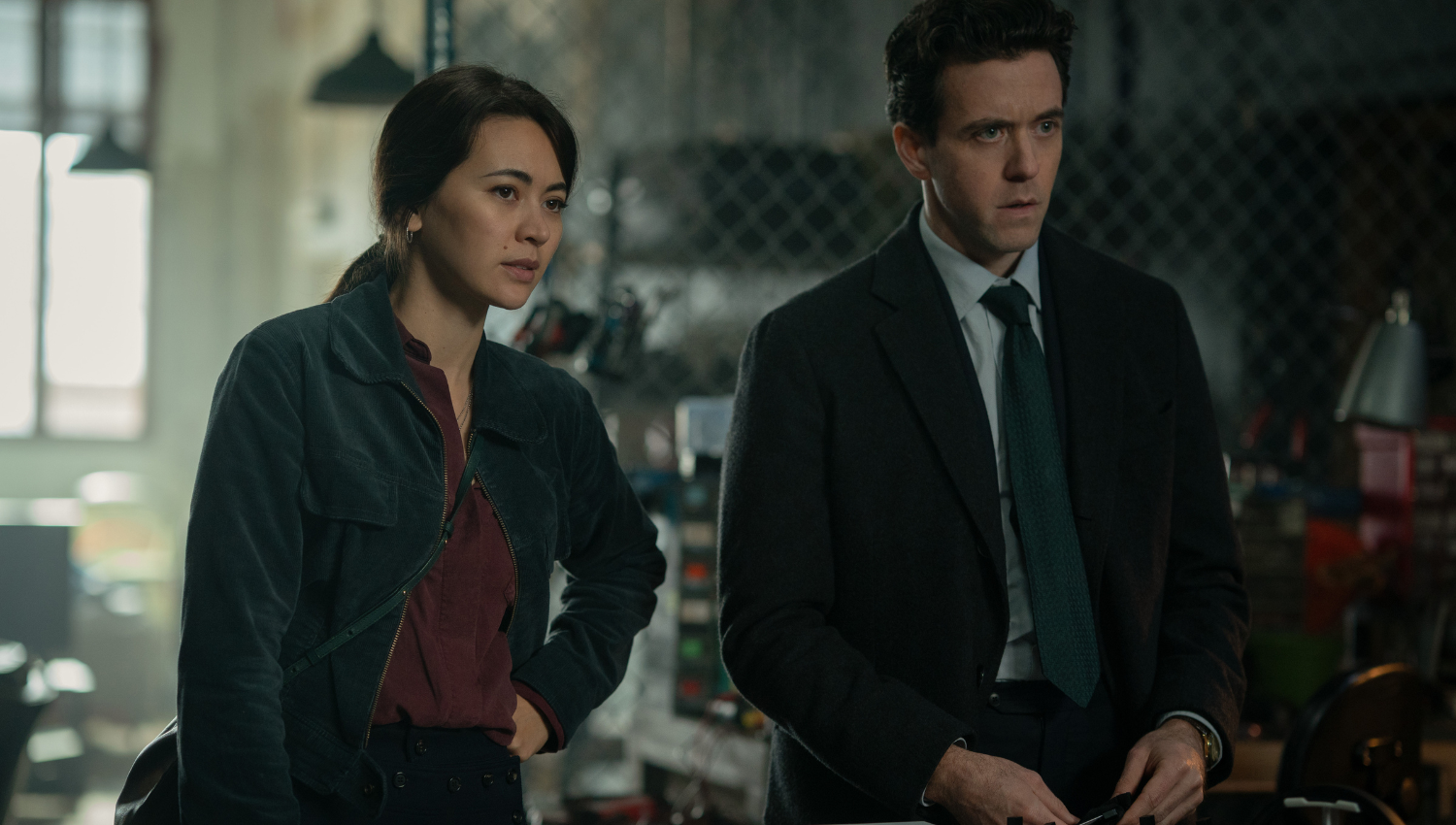
The season’s greatest accomplishment is its willingness to embrace uncertainty rather than merely answer questions. The mythology surrounding the silos inevitably grows larger, revealing a civilization whose carefully maintained lies extend far beyond the concrete walls viewers first encountered. Yet creator Graham Yost wisely avoids allowing exposition to overwhelm character. Every revelation matters because it reshapes someone’s identity rather than simply expanding a fictional universe.
Visually, Silo remains among television’s most meticulously crafted productions. The industrial corridors continue to feel lived-in instead of futuristic, their rusted pipes and dim lighting suggesting decades of quiet compromise rather than dramatic collapse.
Season Three expands the world of "Silo" without sacrificing the quiet human desperation that made it television's most compelling dystopian mystery.
When the story ventures beyond familiar settings, the contrast is startling—not because the landscapes are grander, but because they force viewers to reconsider everything previously accepted as truth.
Season Three also deepens its fascination with institutional control. Governments rarely survive by convincing everyone; they survive by convincing enough people that questioning is more dangerous than obedience. That idea echoes throughout nearly every subplot, lending even ordinary conversations the tension of political negotiations. The show never lectures, trusting audiences to recognize uncomfortable parallels on their own.
Its pacing, admittedly, continues to divide viewers. Silo asks for attention in an era increasingly hostile to slow storytelling. Entire episodes prioritize emotional recalibration over dramatic escalation, and some narrative threads linger longer than necessary. Yet the deliberate rhythm ultimately serves the larger experience. Suspense accumulates through accumulation rather than acceleration.
The supporting ensemble grows increasingly essential, with familiar faces evolving beyond archetypes into fully realized survivors whose conflicting loyalties feel painfully authentic. No one remains entirely heroic or villainous because the series understands that impossible systems manufacture impossible choices.
If earlier seasons were mysteries about what existed outside the silo, Season Three becomes something more unsettling: an examination of what people willingly bury within themselves to preserve order. Few science-fiction dramas balance philosophical ambition with emotional accessibility this gracefully. Every answer uncovers another moral dilemma, ensuring that Silo remains less interested in escaping its prison than understanding why humanity keeps rebuilding it.
Final Thought
Season Three proves that Silo isn't simply one of television's smartest science-fiction dramas—it's one of its most quietly devastating studies of truth, power, and the cost of finally opening the right door.